





The Enactment-based Storytelling project explored how technology could support students in learning to write by decoupling two cognitively demanding tasks: story creation and writing. We investigated the design of a story creation interface where students could act out and create replayable versions of their stories, which would then serve as a writing aid. Led by Dr. Sharon Lynn Chu, director of the Embodied Learning and Experience Lab. Funding for this project was provided by NSF Grant #1736225.
I co-designed the interface with another student, and am responsible for creating the assets and final mock-ups. I then developed the interactive storytelling interface in Unity, creating an environment where students can build, structure, and enact their own stories through multiple forms of recording and motion capture.
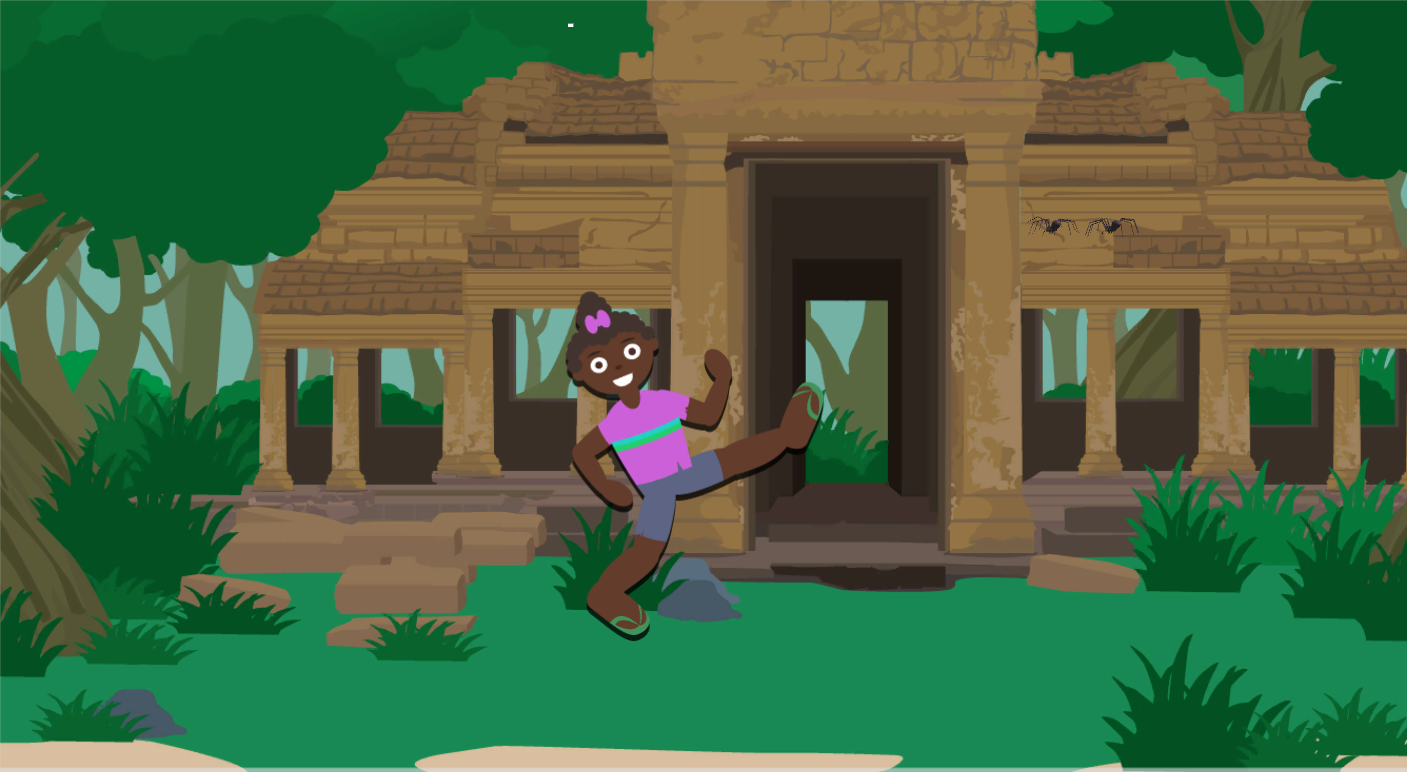
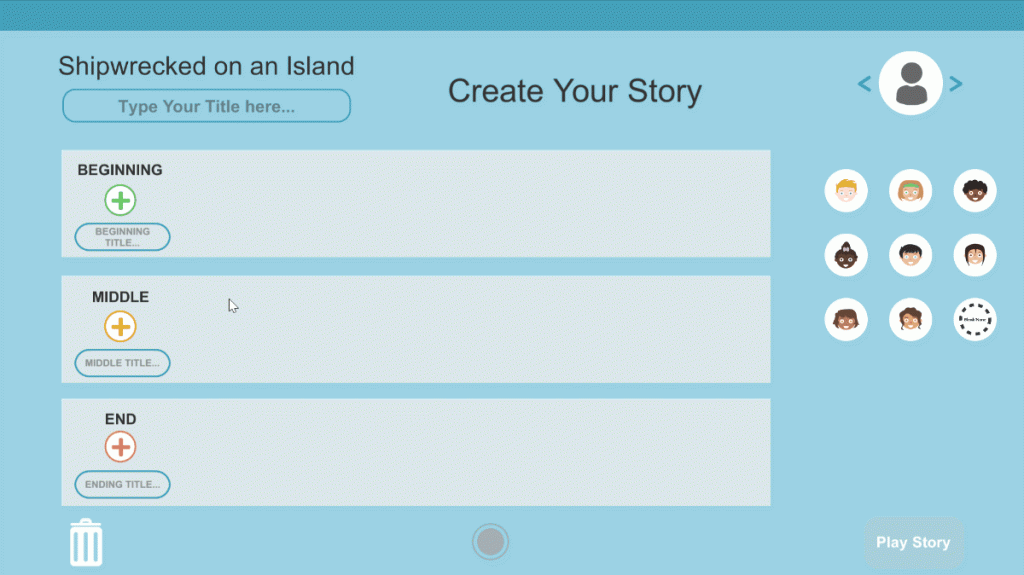
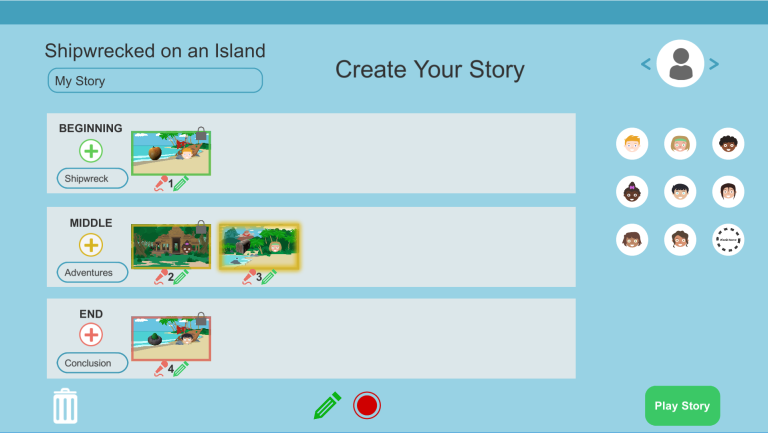
The interface organizes stories into scenes, structured across three sections—Beginning, Middle, and End—reflecting the narrative structures commonly taught in elementary education. Students construct scenes by combining characters, objects, and backdrops, then use these elements to enact their stories. Scenes can be added, removed, reordered, and annotated with titles and notes throughout the creative process.
Beyond supporting story creation, the interface was designed as a research instrument. I implemented multiple cognitive structure conditions that alter how students organize and develop their narratives, allowing the research team to investigate how different forms of scaffolding influence storytelling. I also developed the interface to support integration with motion capture systems, enabling studies comparing different enactment-based approaches to interactive story creation.